
Can an AI Chatbot Actually Generate Leads? Here's What Works
Not all chatbots are built the same. A look at what separates a lead-generating chatbot from one that just frustrates website visitors.
In This Article
Adding an AI chatbot to a website does not automatically generate more customers. A chatbot becomes useful when it reduces friction, understands visitor intent, answers appropriate questions and helps a qualified visitor take the next step. Poorly designed bots can do the opposite by creating repetitive conversations and making it difficult to reach a human.
Key Points
What you need to know
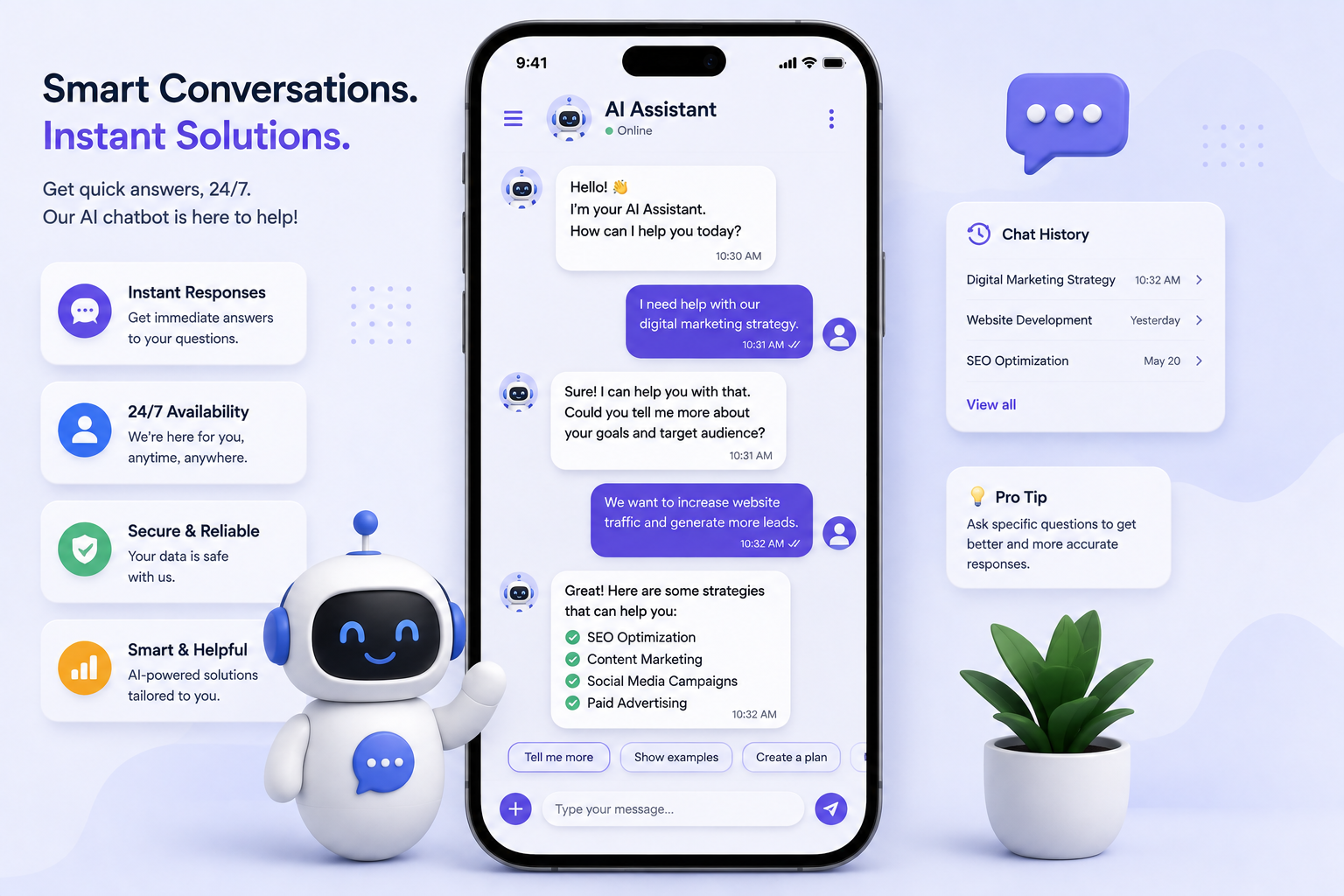
Smart conversations
Understand intent and avoid forcing every visitor into rigid menus.
Useful lead capture
Collect only the information the sales process actually needs.
Instant answers
Handle supported common questions accurately.
Lead qualification
Gather requirements that help the team prioritise enquiries.
Human handoff
Provide a clear route to a person for complex situations.
Business integrations
Connect useful enquiries to CRM, calendar or notification workflows.
Measurement
Track qualified outcomes rather than chatbot conversation volume alone.
Start with the customer problem
Before choosing a chatbot, identify the questions visitors already ask. Do they need pricing information, service recommendations, availability, booking help or a way to request a quote? The bot should solve a real problem rather than exist simply because AI is popular.
Smart conversation and intent
A useful AI chatbot should interpret natural language well enough to understand what the visitor is trying to accomplish. It should also have boundaries. If the system is uncertain, it should avoid inventing an answer and offer a safe route to a human or a reliable source of information.
Lead capture without excessive friction
A lead flow should ask for information that is genuinely useful. Depending on the business, that might include name, contact method, service required, location, budget range or project timeline. Asking too many questions before providing value can reduce completion.
Instant answers can improve conversion
Visitors often have small questions that block action. A chatbot can answer supported questions immediately, helping visitors decide whether the business is relevant. The information should be accurate, current and aligned with the website's actual services.
Qualify leads for the sales team
A chatbot can collect structured information before handing a conversation to sales. This can help the team prioritise urgent enquiries and understand requirements before making contact. Qualification rules should reflect the real sales process rather than arbitrary scores.
Human handoff is essential
There will always be conversations that require people. The chatbot should make the transition clear and preserve useful context where the system allows it. Customers should never feel trapped in a loop because the automation cannot answer a question.
Connect the chatbot to business systems
Lead generation becomes more useful when enquiries flow into the right internal process. A chatbot can work alongside forms, calendars, CRM tools and notification systems. The exact integrations depend on the business and should be designed with privacy and access controls in mind.
Protect customer trust
Tell visitors when they are interacting with automation where appropriate, avoid collecting unnecessary sensitive information, and make sure stored data is handled according to the business's policies and applicable requirements. Trust is part of conversion.
Measure what actually improves
Measure completed conversations, qualified leads, booked calls, sales and response time. Also track abandonment and human handoffs. If a chatbot increases conversation volume but lowers lead quality, the workflow needs adjustment.
Final thoughts
A lead-generating chatbot is not defined by how clever it sounds. It is defined by whether it helps the right visitor move toward a useful next step. Keep the experience short, accurate and transparent, connect it to your business process and give customers an easy way to reach a person.
Create a chatbot that supports the sales journey
Start by listing the questions a prospective customer asks before becoming a lead. Group them into information requests, qualification questions and actions. Information requests might cover services, process or availability. Qualification questions might cover project type, location or timeframe. Actions could include requesting a quote, booking a call or sending contact details. Design the conversation so the visitor receives useful information before being asked for too much personal data. Give the bot clear instructions about what it can and cannot answer. When a question falls outside that scope, the safest experience is to explain the limitation and offer a human route rather than invent an answer.
Improve the chatbot after launch
An AI chatbot should be treated like a product that needs iteration. Review conversation logs or aggregated feedback in a privacy-conscious way to find unanswered questions, repeated misunderstandings and points where users abandon the conversation. Update the knowledge source when services change. Test important paths after every major website or business-process update. Compare chatbot-assisted leads with other enquiry sources and look at lead quality, not only the number of chats. If visitors frequently ask for a human, that is useful information about where automation should stop. The best chatbot experience evolves with the questions customers actually ask.
Make the website and chatbot work together
A chatbot should not be treated as a separate island on the website. The page content should answer the main questions clearly, while the chatbot helps visitors who need guidance or a faster path. Service pages can provide detailed information, while the chatbot can help a visitor choose a relevant service, answer a common question or start an enquiry. Calls to action should remain visible even when the chatbot is closed. This reduces dependence on automation and gives visitors multiple ways to move forward. When the chatbot and website share accurate information and consistent messaging, the overall experience feels more coherent and trustworthy.
Use intent-based calls to action
A chatbot can support different visitor intents instead of giving every person the same sales pitch. Someone researching a service may need an explanation, while a ready-to-buy visitor may want a quote or appointment. Build the conversation around these differences. Offer useful choices, answer the immediate question and then present the most relevant next step. This makes the chatbot feel more like a helpful assistant than a pop-up sales script. Keep the website's normal contact options available as well, because some visitors will always prefer a form, phone call or direct message.
Yorra Tech
Ready to turn your digital presence into a growth tool?
Tell us about your business, your goals, and what you want your website or digital system to achieve.
Start a Project